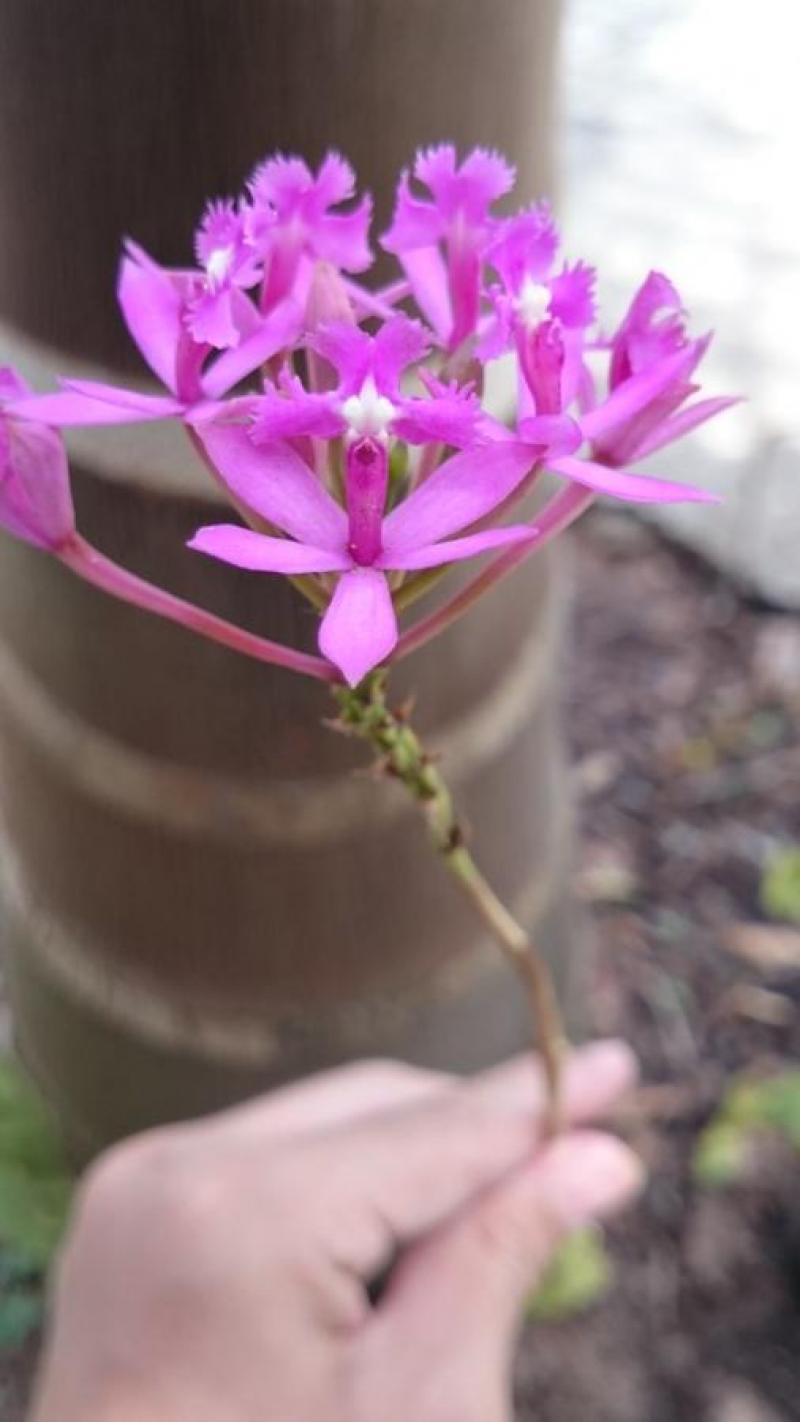
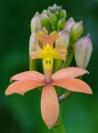
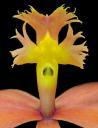
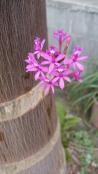
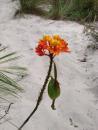
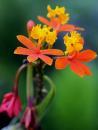
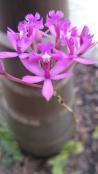
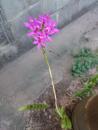
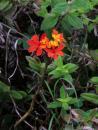
Epidendrum fulgens
Also known as: The Sparkling Epidendrum or Epidendrum fulgens h.f. punctatum Epidendrum bradeanum Epidendrum mosenii in the subfamily: Epidendroideae
Native to: Brazil
General Information
The Sparkling Epidendrum is a large cool to warm growing epiphytic, lithophytic or terrestrial orchid belonging to the sub family Epidendroideae native to Brazil.
Plant Description
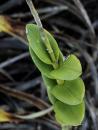
Grows to 20cm. Each new growth has numerous elliptic oblong shaped leaves that grow to 1.5-15cm long. Pseudobulbs grow to 0.5-20cm
Flowers
Numerous blossoms appear during Spring
Blooming Season
- Spring
Substrate(s)
- Coarse
- Medium
- Bark
- Treefern
- Spaghnum Moss
Care Notes
These orchids like to be watered regulary, especially during warm weather, and prefer a well draining mix or also do well mounted, provided they can be watered daily or even many times a day.
These are quite a forgiving orchid, there are no special requirements to get this orchid to flower, just good care and consistent conditions. Larger plants may be more fussy and can react poorly to change; a poorly timed repotting, a pest infection or an unusually hot day can set them back for a couple of years. However, even plants that have been treated poorly can thrive, and if they are set back they often recover much stronger then they would otherwise be.
Climate
Grows at low elevations. Rainfall ranges from 84mm to 302mm per day, heaviest in November and lightest in July. Humidity ranges from 82% to 90%, highest in December and lowest in June. Temperature ranges from 19C to 31C, highest in June (22C to 31C) and lowest in January (19C to 26C).
Watering
These orchids prefer a constant supply of moisture, with a slight drying out between waterings. Saucers can be placed under pots to retain moisture during hot weather, however the saucers should be removed or let to dry every 1-2 weeks to prevent rot. Keep an eye on the plant especially in hot weather and look for cues of under/overwatering and adjust accordingly.
Keep moisture levels up during hot weather as the plant is prone to dehydrationFertiliser
Apply liquid based fertiliser per recommended directions. They can benefit from a high phosphate fertiliser leading up to flowering season, followed by a high nitrogen fertiliser when new growth appears, and a balanced fertiliser in other times. These orchids can also tolerate slow release fertiliser applied 1-2 pellets per cup (250ml) of media.
Use balanced fertiliser during Spring and Summer. Apply fertiliser regularly at half strength year round. Use a high Nitrogen fertiliser during Spring and Summer. Use a high Phosphorous fertiliser during Summer.Potting
These plants can be sensitive to repotting though should not require repotting regularly. Repotting should be done when the mix has broken down to the point that it doesn't absorb water or holds onto water for far too long, usually the plant shows a decline in growth as well.
The mix should be free draining, with a blend of 30% inorganic ingredients such as coarse sand, gravel or perlite, mixed in with about 70% organic ingredients such as peat, leaf litter or decomposed bark. Avoid commercial potting mixes as they can vary wildly and may contain "wetting agents" that can hold onto water for loo long, causing rotting and stunted growth.
This plant does very well in baskets or suspended pots This plant does well mounted.