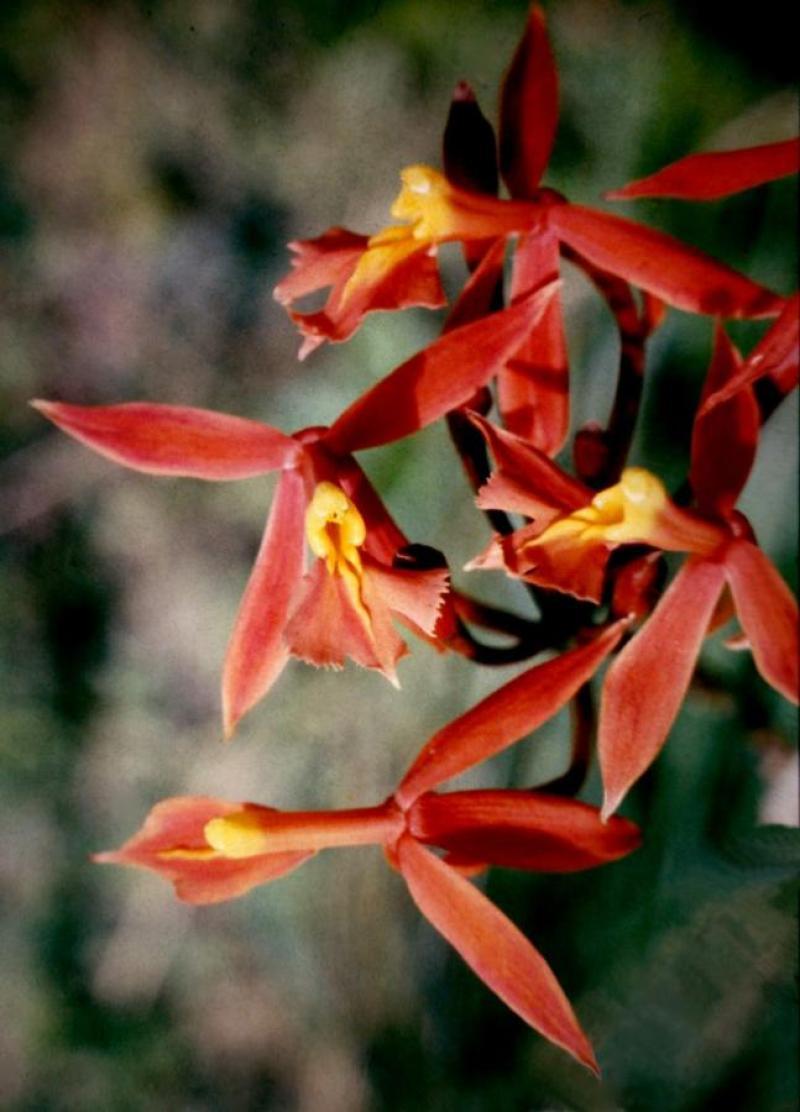
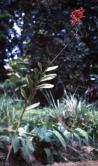
Epidendrum macrocarpum
Also known as: Schomburgk's Epidendrum or Epidendrum ibaguense var. schomburgkii Epidendrum schomburgkii Epidendrum schomburgkii var. sworderi in the subfamily: Epidendroideae
Native to: Departamento del Huila - Colombia Junin - Peru Loreto - Peru
General Information
Schomburgk's Epidendrum is a medium to large sized sympodial warm to hot growing terrestrial orchid belonging to the sub family Epidendroideae native to Colombia and Peru. It is named after the German Brothers Explored Guyana in the 19th century.
Plant Description
Sympodial. Grows to 100cm. Each new growth has numerous elliptic oblong shaped leaves that grow to 5.6-16cm long. Pseudobulbs grow to 100cm
Flowers
Numerous blossoms appear during Autumn
Blooming Season
- Autumn
Substrate(s)
- Coarse
- Medium
- Bark
- Treefern
- Spaghnum Moss
Care Notes
These orchids live on the forest floor, often in dead leaves or humus, yet still have the organs that would allow them to store water given unpredictable or intermittent weather conditions. They require some moisture to always be present in the soil, but not much. Water when the soil approaches dryness and don't let it dry out completely. Some growers place pots in saucers to retain water, but this may create an environment that is too wet, leading to rot.
In most areas these can be grown in the garden under trees or in sheltered locations, as long as they are reasonably protected from huge weather swings, excessive heat, and frost.
Climate
Grows at low to high elevations. Rainfall ranges from 132mm to 345mm per day, heaviest in October and lightest in February. Humidity ranges from 73% to 86%, highest in October and lowest in June. Temperature ranges from 19C to 32C, highest in March (21C to 32C) and lowest in January (19C to 29C).
Watering
These orchids prefer a wet-dry cycle between waterings, they should be watered frequently but only when the moisture is approaching dryness, where the pot feels light and/or the media looks dry. Keep an eye on mounted orchids in warm weather as they may dehydrate quickly.
Keep moisture levels up during hot weather as the plant is prone to dehydrationFertiliser
Apply liquid based fertiliser per recommended directions. They can benefit from a high phosphate fertiliser leading up to flowering season, followed by a high nitrogen fertiliser when new growth appears, and a balanced fertiliser in other times. These orchids can also tolerate slow release fertiliser applied 1-2 pellets per cup (250ml) of media.
Use balanced fertiliser during Spring and Summer. Apply fertiliser regularly at half strength year round. Use a high Nitrogen fertiliser during Spring and Summer. Use a high Phosphorous fertiliser during Summer.Potting
These plants can be sensitive to repotting though should not require repotting regularly. Repotting should be done when the mix has broken down to the point that it doesn't absorb water or holds onto water for far too long, usually the plant shows a decline in growth as well.
The mix should be free draining, with a blend of 30% inorganic ingredients such as coarse sand, gravel or perlite, mixed in with about 70% organic ingredients such as peat, leaf litter or decomposed bark. Avoid commercial potting mixes as they can vary wildly and may contain "wetting agents" that can hold onto water for loo long, causing rotting and stunted growth.
This plant does very well in baskets or suspended pots This plant does well mounted. Repotting is best done annually.